#1 Bellingham WA Water Damage Restoration Services — Emergency, Structural Drying & Mold Prevention
Same/Next Day Water Damage Restoration in Bellingham — Serving Ferndale • Birch Bay • Sudden Valley • Whatcom Falls • Meridian • Lummi Nation • All of Whatcom County. Bellingham's most trusted water damage restoration Bellingham WA team for homeowners, rental properties, and commercial buildings. Fully IICRC-certified — WRT, ASD, AMRT, HST, and FSRT — emergency extraction, structural drying, mold remediation, fire damage restoration, and complete water damage repair built for the Pacific Northwest's relentless wet season.
- 24/7 Emergency Response — No Extra Charge
- 10 Years Serving Bellingham, WA
- 30 IICRC-Certified Professionals
- Five IICRC Certifications on Staff
Request Emergency Restoration
Fill out the form — we respond immediately, 24/7.
Act Now — Pacific Northwest Water Damage Compounds Within 24 Hours
Bellingham's Pacific Northwest climate delivers the conditions that make water damage uniquely dangerous here. High ambient humidity means wet materials don't dry on their own — they absorb more moisture from the air while you wait. Mold colonizes wet drywall, insulation, and framing within 24 to 48 hours in Bellingham's conditions — faster than the national average, and faster than most homeowners expect.
The wet season from October through April delivers atmospheric river events that can flood crawl spaces to more than a foot of standing water in a single storm, overwhelm drainage systems that handled last week's rain just fine, and leave Whatcom County neighborhoods like Birchwood, Happy Valley, and Whatcom Falls with water in below-grade spaces that won't dry without industrial dehumidification.
A pipe burst, appliance failure, or sewage backup inside a Bellingham home adds a plumbing emergency on top of a climate that is already working against the drying process around the clock. Every hour without professional extraction and structural drying is another hour mold and structural damage are compounding behind walls and under flooring you can't see.
Why Does Whatcom County Water Damage Restoration Require Specific Local Expertise?
Bellingham and Whatcom County face water damage conditions that are genuinely distinct from drier or more temperate markets. The Pacific Northwest's sustained wet season — October through April — doesn't just bring heavy rain: it saturates soil, raises groundwater tables, and maintains high outdoor humidity levels that prevent natural evaporation even when the rain stops.
Properties near Whatcom Creek, Lake Whatcom, and Padden Gorge face recurring seasonal flooding risk that repeats every winter rather than being a single catastrophic event. Older homes in Fairhaven, Birchwood, and Happy Valley — many with original crawl space construction and aging vapor barriers — provide the ideal conditions for recurring mold development every time the water table rises.
Birch Bay water damage calls, Sudden Valley crawl space flooding, and Ferndale commercial water events each carry specific access and drying challenges that only local Whatcom County experience can anticipate and address efficiently.
How Quickly Can Boul Belling Restoration Respond to a Water Emergency in Bellingham?
True water damage emergencies — active flooding, sewage backup, burst pipe causing structural saturation — receive immediate response: a certified crew dispatched within the hour, a complete thermal imaging and moisture mapping assessment on arrival, and extraction and drying equipment installed the same day.
Minor events — an appliance leak, a slow crawl space seep — are triaged on the call and scheduled for same-day or next-day response depending on assessed urgency. With 5 fully equipped restoration vehicles serving all of Bellingham and Whatcom County, your call reaches a technician already in the region, not a national call center routing from a different state.
We account for the Guide Meridian corridor, Whatcom County road conditions during storm events, and seasonal access challenges on rural properties between Ferndale and Sudden Valley.
What's the Most Effective Water Damage Restoration Approach for Bellingham Homes?
A four-part system works best in the Pacific Northwest: accurate thermal imaging and moisture mapping to find hidden water in wall cavities, subfloors, and crawl spaces before it causes invisible damage; industrial extraction to remove all standing water including from confined below-grade spaces; certified IICRC S500-standard structural drying using equipment calibrated for Bellingham's high ambient humidity; and post-drying clearance verification with documented moisture readings that confirm complete drying rather than visual assumption.
In Bellingham's climate, surface drying that leaves moisture trapped inside wall cavities or subfloors is not restoration — it's deferred mold remediation waiting to happen.
Why Boul Belling Restoration Wins — Restoration-Only, Pacific Northwest-Tuned
Most service companies list 10 different trades and route water damage calls to generalist crews without the IICRC certification that defines genuine restoration practice. But Bellingham is unique — a Pacific Northwest climate that creates year-round mold conditions, a housing stock where crawl space construction over damp ground is the standard, atmospheric river events that test drainage systems every winter, and a mix of rental properties, student housing near Western Washington University, and owner-occupied homes that each require specific coordination workflows. That's why we built our service to answer one question better than anyone: water damage restoration Bellingham WA.
1. IICRC S500 & S520 Protocol — Every Project
Every water damage project Boul Belling undertakes follows the IICRC S500 Standard for Water Damage Restoration — the industry's governing document for extraction rates, drying equipment placement, moisture content targets, and documentation requirements. That standard doesn't change based on project size or property type. It's the difference between a property dried to visual inspection and a property dried to certified, documented IICRC standard.
- Thermal imaging and calibrated moisture metering on every project — we find the hidden moisture before it causes the invisible damage.
- Daily moisture monitoring with documented readings that confirm verified drying progress, not visual estimation.
2. Pacific Northwest Humidity Intelligence
Bellingham's marine-zone ambient humidity means standard drying equipment timelines don't apply. Commercial dehumidifiers that reach dry standard in three days in Denver take five to seven days in Bellingham's conditions. We calibrate our drying system deployment, equipment quantity, and monitoring schedule to what Whatcom County's actual humidity requires — not a national average.
- Dehumidifier deployment scaled to Bellingham's marine-zone ambient humidity conditions — not national averages that underestimate Pacific Northwest drying time.
- Drying timelines communicated honestly based on actual local conditions, so property owners plan realistically.
3. Rental Property & Landlord Workflows
Bellingham is home to Western Washington University and a significant rental property market. Tenant-occupied properties have specific coordination requirements — timing service visits around occupancy, communicating with both tenants and out-of-area owners, and producing documentation that serves habitability compliance, insurance claims, and lease dispute protection simultaneously.
- Time-stamped before-and-after photo documentation delivered digitally to out-of-area landlords after every project.
- Tenant coordination protocols — entry timing, occupant communication, and habitability documentation produced as part of standard service.
- Discreet, professional service for property management clients on request.
4. Complete Five-Service Restoration Scope
Boul Belling Restoration handles the complete restoration scope — emergency water damage response, structural water damage repair, basement and crawl space flood cleanup, fire and smoke damage restoration, and IICRC AMRT-certified mold remediation — under one team, under one contract, with one insurance documentation package.
- All five restoration services in-house — no subcontractor handoff between emergency response and structural repair phases.
- Single insurance documentation package from first moisture reading through final clearance verification.
What Is the Most Effective Approach to Water Damage Restoration in Bellingham's Pacific Northwest Climate?
The most effective approach is IICRC S500-compliant four-phase restoration: precise moisture mapping before extraction begins, complete industrial extraction including below-grade confined spaces, certified structural drying to documented moisture content targets, and post-drying clearance verification. In Bellingham's Pacific Northwest conditions, restoration without clearance verification is not finished — it's a mold problem deferred by two to four weeks.
- IICRC S500-compliant drying protocol — moisture content targets verified by calibrated instruments, not visual inspection.
- IICRC certified restoration Bellingham means every project is documented to the standard insurance companies and property attorneys require.
How Boul Belling Restoration Compares to Other Bellingham Water Damage Companies
Bellingham property owners deserve complete transparency when choosing a restoration company. Below is a direct comparison showing how Boul Belling Restoration stands apart from the categories of service available in Whatcom County.
| Feature | General Handyman | National Franchise | Out-of-Area Dispatch | Boul Belling Restoration (Us) |
|---|---|---|---|---|
| Restoration Focus | One of many services | Standardized playbook | Sends crews from outside Whatcom | Restoration Only |
| Pacific NW / Bellingham Expertise | No restoration training | No local humidity calibration | No Pacific NW climate experience | 10 years in Bellingham specifically |
| IICRC Certification | None | Brand training varies | May vary | Full: WRT, ASD, AMRT, HST, FSRT |
| Rental / Landlord Support | No coordination system | Cookie-cutter protocols | No local knowledge | Rental property workflows |
| Insurance Documentation | No formal documentation | Standardized, non-local | Delays in documentation | Photo-documented every project |
What Makes Boul Belling Restoration Different
Our focus is simple — restoration. Every certification, every piece of equipment, and every process we use is built specifically for Bellingham's climate, housing stock, and property types.
- Restoration only — 100% of our expertise, training, and equipment are restoration-specific. No distractions.
- Five IICRC certifications — WRT, ASD, AMRT, HST, and FSRT — covering every restoration service we offer.
- Pacific Northwest humidity expertise — drying systems calibrated for Bellingham's marine-zone conditions, not national averages.
- 24/7 emergency response — direct dispatch, no call center, no subcontractor routing.
- Transparent pricing — written estimates before work begins, no hidden charges.
- 90-day satisfaction guarantee — if a concern arises with our workmanship, we return at no charge.
- Rental property workflows — landlord-specific documentation, tenant coordination, and habitability compliance reporting.
- Washington State seller disclosure support — post-remediation clearance documentation for mold and water damage as required.
Is Hiring a Professional Restoration Company in Bellingham Worth the Cost?
Absolutely — especially given Bellingham's humidity conditions, which make DIY drying attempts not just ineffective but actively counterproductive. A consumer dehumidifier running in a Birchwood crawl space after a flooding event removes surface moisture while Bellingham's outdoor air continuously reintroduces humidity into the same space. Professional restoration equipment operates at industrial scale with the dehumidification capacity to overcome ambient humidity rather than merely contend with it.
At Boul Belling Restoration, we combine thermal imaging that finds moisture you can't see, IICRC S500-standard drying that verifies completion rather than assuming it, and complete insurance documentation that protects your claim from the first emergency call to final clearance. The cost of professional restoration is a fraction of the structural repair and mold remediation cost of deferred or incomplete response in Bellingham's climate.
Bottom Line: General contractors treat water damage as just one of many problems they handle. We treat it as the only problem that matters.
Before & After Water Damage Restoration in Bellingham, WA — Documented Evidence, Not Stock Photography
Every before-and-after image we present comes from actual Bellingham and Whatcom County properties where we performed complete thermal imaging assessment, IICRC-standard extraction and drying, and post-drying clearance verification. From crawl space flooding in Happy Valley during November atmospheric river events, to burst pipe restoration in Birchwood residential properties, to Category 3 sewage backup decontamination in Downtown Bellingham commercial spaces, to FSRT-certified fire damage restoration in the Historic Fairhaven District — our documentation reflects the same precision and transparency we bring to every project call.
How Water Damage Happens in Bellingham by Season — A Whatcom County Property Owner's Calendar
Understanding Bellingham's seasonal water damage pattern is the difference between proactive prevention and reactive emergency calls. Here's how damage risk changes throughout the Whatcom County year — and when preparation matters most.
October–March (Wet Season Peak & Atmospheric River Events)
Bellingham's October through March wet season delivers the concentrated rainfall that drives most of Whatcom County's water damage emergencies. Single atmospheric river events can bring one to two inches of rain within 24 hours, saturating soil, raising water tables beneath crawl spaces, and flooding below-grade spaces in neighborhoods like Birchwood, Happy Valley, and Whatcom Falls faster than drainage systems can handle. The Pacific Northwest's high baseline humidity means that wet materials from October flooding events may still not be at dry standard when November's next storm arrives.
- October marks the beginning of peak water damage risk — inspect crawl space vapor barriers and sump pump function before first major rain.
- Atmospheric river events can flood crawl spaces to one foot or more in a single storm; professional extraction equipment is required, not consumer pumps.
- Post-storm inspection within 48–72 hours identifies structural water damage from the hidden migration that continues after standing water is removed.
April–May (Spring Melt & Transition)
As Whatcom County transitions out of peak wet season, April and May bring snowmelt from Mount Baker and the North Cascades into creek systems and groundwater — including Whatcom Creek, Padden Creek, and properties adjacent to Galbraith Mountain drainage corridors. Spring also reveals the accumulated damage of winter: vapor barriers that failed under months of elevated groundwater pressure, mold that developed in crawl spaces during the wet season, and structural materials that absorbed moisture over winter and need assessment before warm-season humidity obscures the moisture readings.
- May is the optimal window for crawl space vapor barrier inspection and mold assessment before summer makes the space harder to work in.
- Properties near Whatcom Creek and Lake Whatcom should be assessed for groundwater pressure-related intrusion after snowmelt peaks.
- Post-winter structural assessment identifies accumulated moisture damage from the wet season before it compounds through spring melt.
June–September (Lower Emergency Frequency, Highest Prevention Value)
Water damage emergency frequency drops in Bellingham's summer months, but this is the highest-value period for preventive work. Summer's lower ambient humidity makes structural drying faster and more economical, mold assessment and remediation more accessible, and crawl space encapsulation and vapor barrier repair more effective. Any mold that developed during the wet season and hasn't yet been addressed should be remediated before October's rains restart the cycle.
- Summer is the optimal season for crawl space encapsulation, vapor barrier replacement, and mold remediation — faster drying, lower equipment runtime, more accessible spaces.
- August and September are the last window for preventive work before the October wet season restarts Bellingham's water damage risk cycle.
- Whole-house moisture assessment in summer catches accumulated wet-season damage before the next wet season compounds it.
Year-Round Challenge: Pacific Northwest Humidity & Mold Risk
Unlike markets where water damage follows clear seasonal spikes, Bellingham's high baseline ambient humidity creates year-round mold risk from any moisture intrusion. Mold colonies can begin developing within 24 to 48 hours of water exposure in Bellingham's conditions — even in summer, when outdoor humidity remains elevated by Pacific Northwest standards. Any water event that isn't professionally dried to IICRC dry standard carries mold development risk in Whatcom County regardless of the time of year.
- Mold development begins within 24–48 hours of any moisture intrusion in Bellingham's marine-zone conditions.
- Year-round crawl space humidity monitoring is the most cost-effective preventive investment for Whatcom County homeowners.
- Any musty odor discovered at any time of year warrants professional moisture assessment — it is never safe to assume mold won't develop in Bellingham's climate.
Scheduling Intelligence for Bellingham Water Damage Response
When responding to water damage emergencies in Bellingham, we account for Guide Meridian and Interstate 5 corridor timing, Whatcom County rural road conditions after storm events, seasonal access challenges on properties near Galbraith Mountain and the Chuckanut Mountains, and post-atmospheric-river response periods when multiple simultaneous emergencies require efficient routing across the Birch Bay, Ferndale, Sudden Valley, and Meridian service corridors.
We also coordinate with Bellingham's permit office for projects requiring structural repair permits, and understand Washington State's seller disclosure requirements for water damage documentation that property transactions in Whatcom County routinely require.
How Can I Prevent Water Damage From Recurring in My Bellingham Property?
Prevention in Bellingham's climate requires addressing the moisture sources that the Pacific Northwest's wet season continuously provides, not just reacting to the visible emergencies that result.
- Install and maintain a crawl space vapor barrier and ventilation system appropriate for Whatcom County's moisture conditions — the single most effective investment in preventing recurring crawl space mold and water damage.
- Test sump pump function in September before the wet season begins — a pump that fails in October during the first atmospheric river event is a preventable emergency.
- Schedule a post-wet-season crawl space and basement inspection every April to identify accumulated winter moisture damage before it compounds through spring melt.
- Ensure gutters and downspouts are clear and directing water at least four feet from the foundation before October rains begin.
- Address any musty smell immediately — in Bellingham's humidity, odor without visible mold means active hidden mold development that has been underway for weeks.
What We Restore — Observable Symptoms to Certified Remedies in Bellingham, WA
No vague marketing language here. We list actual, observable symptoms and the specific certified restoration methods we use to address them in Bellingham and Whatcom County properties.
Industrial submersible extraction, below-grade drying with confined-space dehumidifiers and air movers, Category classification for contamination assessment.
Thermal imaging moisture mapping, wall cavity drying with injection or demolition access as required, documented IICRC S500 drying protocol.
AMRT-certified moisture assessment, thermal imaging for hidden moisture in wall cavities and subfloors, ANSI/IICRC S520 mold protocol if active growth is identified.
AMRT-certified mold remediation with negative-pressure containment, HEPA removal, and post-remediation clearance verification.
FSRT-certified soot cleaning, molecular smoke odor elimination, board-up and stabilization if structural integrity was affected. Learn more about fire damage restoration.
Category 3 decontamination protocol, full extraction and sanitization, EPA-registered antimicrobial treatment.
Moisture assessment to identify hidden pipe leak or groundwater intrusion affecting crawl space or wall cavities.
Each project is documented with before-and-after photographs, daily moisture readings, Category classification, and a final clearance report — so landlords, insurance adjusters, and out-of-area property owners can verify exactly what was done and confirm IICRC dry standard was reached.
How Much Does Water Damage Restoration Cost in Bellingham, WA?
Water damage restoration in Bellingham typically ranges from $1,500–$3,500 for a minor single-room clean water event (Category 1) to $3,800–$8,000 for multi-room structural drying with documented moisture work. Category 3 sewage or contaminated water events requiring full decontamination typically run $5,000–$15,000 or more. Mold remediation for crawl space or wall cavity events runs $500–$6,000+ depending on access and extent. The average flood cleanup cost in Bellingham runs $3,986–$4,303 for standard-scope projects based on local data.
Every Boul Belling Restoration project begins with a free assessment and written estimate before any work starts. We provide direct insurance billing coordination and complete documentation packages to support your claim from first response through final clearance.
Our Proven 6-Step Water Damage Restoration Process in Bellingham, WA
24/7 Emergency Dispatch & Phone Triage
We start by gathering the right information on the call — water source and category (clean, gray, or sewage), visible extent of flooding, time since water event began, and access details for the property. We request a quick description or photo of visible conditions so our crew arrives prepared and already assessing likely moisture migration paths.
Thermal Imaging & Moisture Mapping
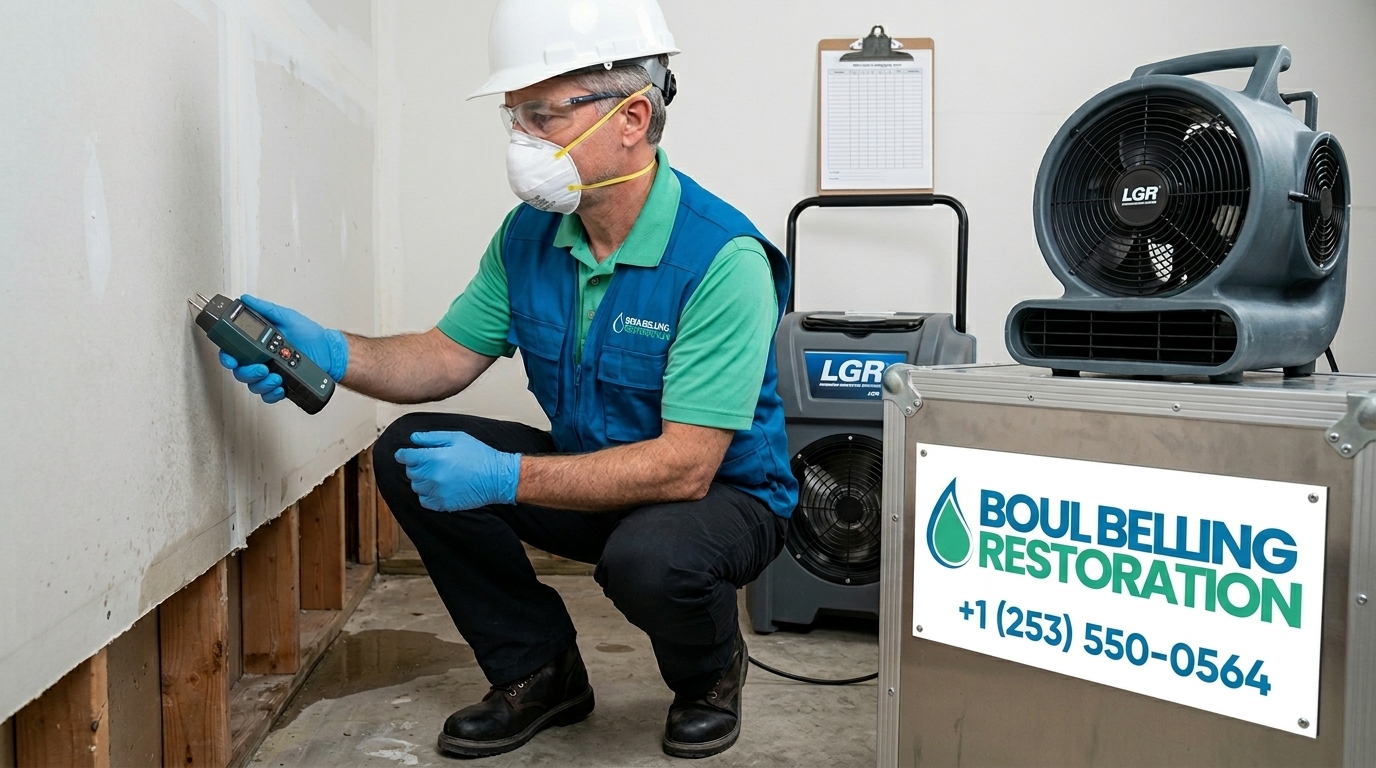
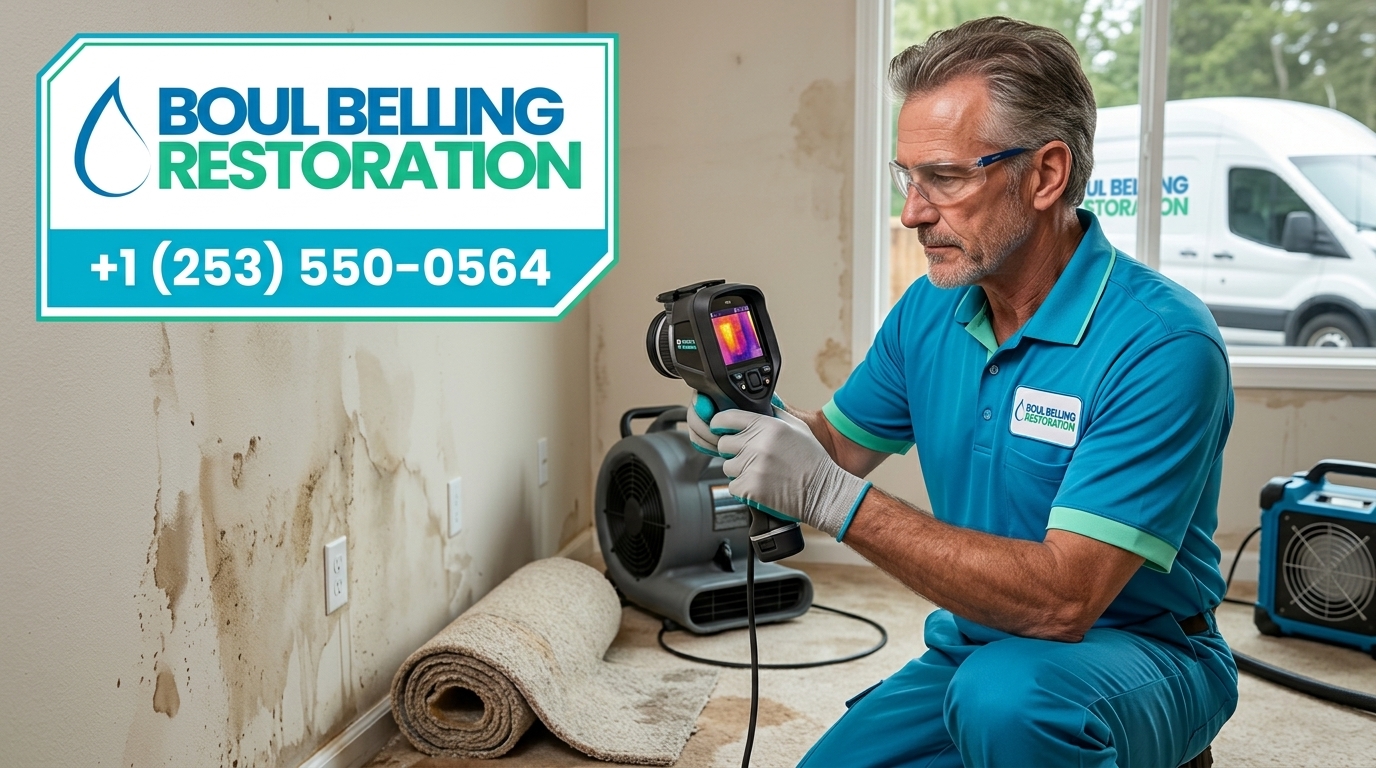
On arrival, our technician performs a complete thermal imaging scan and calibrated moisture meter assessment of all affected areas — including wall cavities, subfloors, crawl spaces, and adjacent rooms beyond visible water. We map the full moisture extent, classify the water category, and document every reading before extraction begins.
Written Estimate & Scope Documentation
You receive a written scope and estimate within hours of assessment, outlining the Category classification, equipment plan, drying timeline estimate, and cost range. No surprise charges, no scope changes without communication. We coordinate directly with your insurance adjuster if a claim is being filed.
Industrial Extraction & Contamination Control
We deploy submersible pumps, truck-mounted extractors, and confined-space equipment to remove all standing water as rapidly as possible. Category 3 events immediately trigger full decontamination protocol — no waiting for category assessment to be completed after extraction begins.
IICRC S500 Structural Drying
We install commercial dehumidifiers and high-velocity air movers calibrated for Bellingham's marine-zone humidity, monitor moisture readings daily, and adjust equipment placement based on actual drying progress rather than a fixed schedule. Drying is complete when calibrated instruments confirm IICRC dry standard — not when surfaces look dry.
Post-Drying Clearance & Insurance Documentation
We perform a final moisture verification using calibrated instruments, confirm IICRC dry standard across all affected areas, and deliver a complete documentation package — moisture logs, thermal images, before-and-after photos, Category classification, and scope report — for your insurance claim, Washington State seller disclosure, or landlord habitability records. For out-of-area owners, this package is delivered digitally within 24 hours.
What's Included in a Boul Belling Restoration Project?
Our 6-Step Restoration Process takes you from first call to certified, documented, IICRC-standard completion with no gaps, hidden charges, or handoffs to uncertified subcontractors.
- 24/7 emergency dispatch and on-site arrival within the hour for active flooding events.
- Thermal imaging and calibrated moisture mapping of all affected areas.
- Written estimate with Category classification before work begins.
- Industrial extraction including confined-space below-grade equipment where needed.
- IICRC S500 structural drying with daily documented moisture monitoring.
- Category 3 decontamination where sewage or contaminated water is involved.
- Post-drying clearance verification to IICRC dry standard.
- Complete insurance documentation: moisture logs, thermal images, before-and-after photos, scope report.
Bellingham Landlords & Property Managers — Protect Your Rental Portfolio with Certified Documentation
One tenant call about a water leak, sewage backup, or mold discovery can trigger Washington State habitability code requirements, lease disputes, and lost rental income that far exceed the cost of the underlying restoration. Boul Belling Restoration builds landlord-specific workflows into every rental property project — because we understand that documentation, timing, and tenant coordination are as important as the restoration work itself.
Habitability Priority Response
We prioritize rental property water damage calls because Washington State's landlord-tenant code creates legal obligations with time-sensitive requirements. Documented response timing is as important as the restoration itself for habitability compliance purposes.
Time-Stamped Documentation for Every Visit
Every service visit produces a time-stamped photo and moisture report showing property condition before and after each phase of work — essential documentation for habitability code compliance, security deposit disputes, Washington State seller disclosures, and insurance claims.
Remote Owner Coordination
We coordinate directly with property managers and tenant contacts using lockbox codes, entry instructions, and agreed communication protocols. Out-of-area landlords receive digital reports within 24 hours — you stay in control of the project without being in Bellingham.
Washington State Seller Disclosure Support
Washington State's Seller Disclosure Statement requires disclosure of known water damage and mold. Our post-restoration clearance documentation — calibrated moisture readings, before-and-after photos, Category classification, and scope report — provides the verified, professional evidence that protects sellers from disclosure liability.
WWU Rental Property Expertise
Bellingham's large Western Washington University student rental population creates a distinct landlord-tenant dynamic with specific habitability requirements, property management coordination, and documentation needs. We understand the timeline pressures of student housing turnovers and build our workflows around them.
Multi-Property Portfolio Coordination
For property managers overseeing multiple Bellingham rental units across neighborhoods from Birchwood to Barkley to Sehome, we provide consolidated service histories, priority scheduling during peak wet-season demand, and coordinated inspection windows for annual pre-season assessments.
Serving Bellingham Since 2015 — 10 Years of Whatcom County Restoration
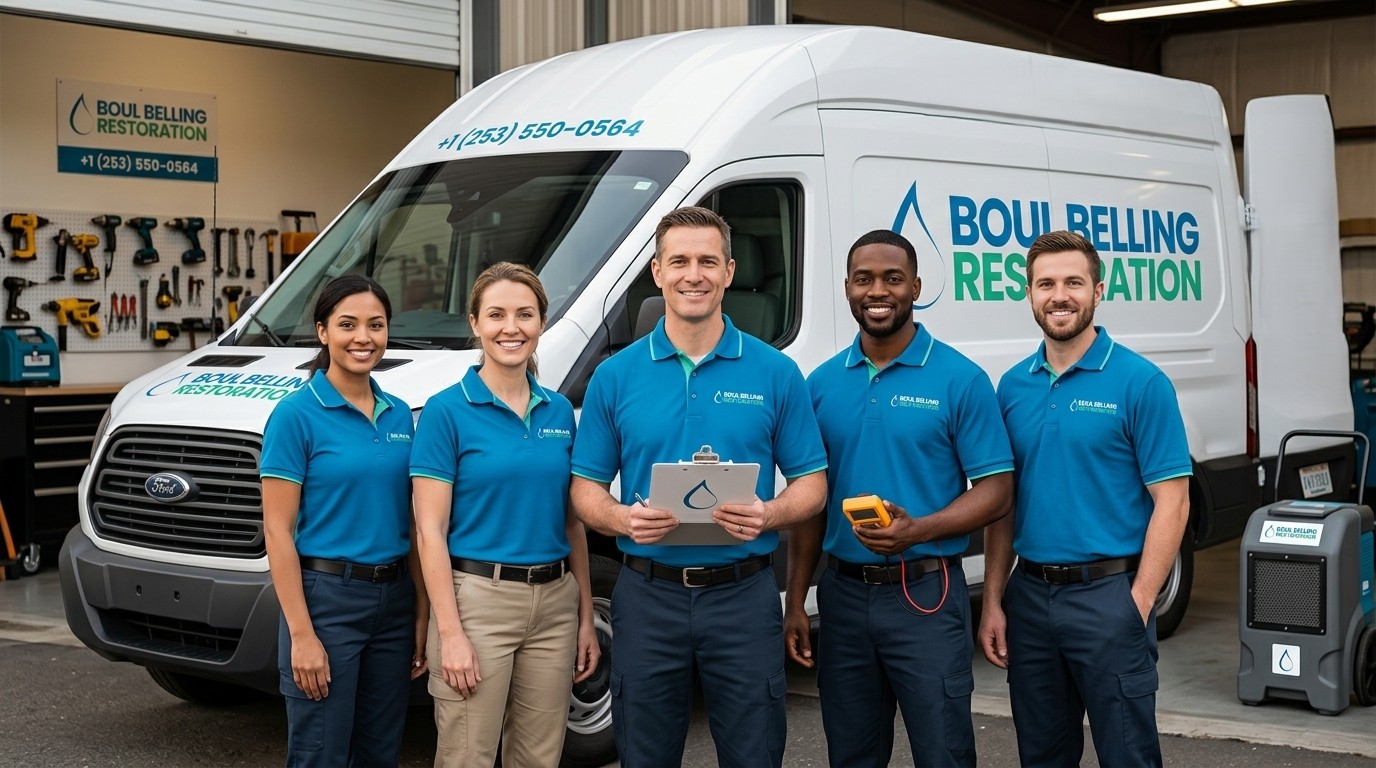
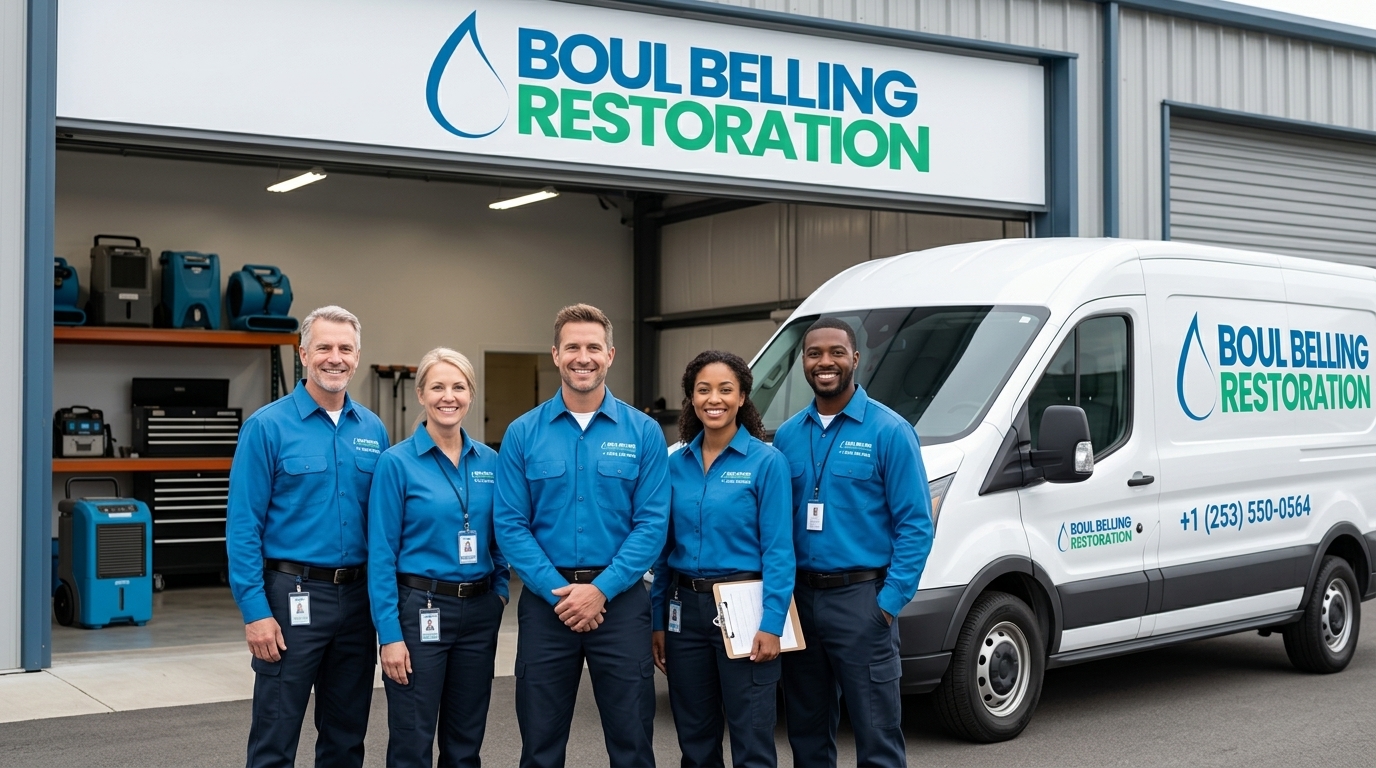
We include a detailed project log, calibrated moisture documentation, and technician identification on every restoration report so you can verify exactly what was done, when, and by whom. All on-site work is completed by our own vetted, IICRC-certified Boul Belling Restoration professionals — your call reaches the certified technician performing the work, not a dispatched subcontractor whose IICRC status we cannot guarantee. Serving Bellingham homeowners, landlords, and commercial property owners since 2015, we are locally rooted, Washington code-current, and completely restoration-focused.
We stand behind our work with a 90-Day Satisfaction Guarantee — if a concern arises within 90 days related to our workmanship, we return at no charge. No fine print, no exceptions.
Our Restoration Services in Bellingham, WA
We provide certified, documented restoration across five services — giving Bellingham homeowners, landlords, and commercial property owners a single team for every damage event.
Emergency Water Damage Restoration Bellingham WA
24/7 IICRC Certified Response — immediate dispatch, thermal imaging, industrial extraction, and same-day drying.
Learn MoreWater Damage Repair
Post-Drying Structural Reconstruction — drywall, flooring, framing, and complete structural restoration after certified drying.
Learn MoreBasement & Crawl Space Flood Cleanup
Below-Grade Specialists — confined-space extraction, dehumidification, and vapor barrier assessment for Whatcom County crawl spaces.
Learn MoreFire Damage Restoration
FSRT-Certified Soot, Smoke & Odor Elimination — board-up, structural stabilization, soot removal, and molecular odor treatment.
Learn MoreMold Remediation
AMRT-Certified ANSI/IICRC S520 Protocol — negative-pressure containment, HEPA removal, and post-remediation clearance verification.
Learn MoreWhat's the Most Reliable Approach to Preventing Recurring Water Damage in Bellingham?
The most reliable approach in Bellingham's climate is source correction + certified drying + documented clearance — addressing the moisture source, drying to measured IICRC standard rather than visual assumption, and verifying clearance with calibrated instruments that confirm the work is genuinely complete. In Bellingham's Pacific Northwest humidity, surface-dried structures that still contain moisture in wall cavities or subfloors will develop mold within weeks of completion, requiring the same remediation work the restoration was supposed to prevent.
At Boul Belling Restoration, we combine thermal imaging that finds moisture that visual inspection misses, IICRC S500-standard drying that verifies completion rather than assuming it, and ANSI/IICRC S520-compliant mold protocol when microbial growth is identified — ensuring the restoration we complete is genuinely complete, not just visually finished.
Have Questions About Water Damage in Bellingham? Our Certified Team Has Answers.
We're happy to help with any restoration question — from "does my homeowner's insurance cover water damage in Washington State" to "how do I know if I need mold remediation" to "what documentation do I need for a seller disclosure." If you can't find what you need below, call or email and our team responds same day.
Common Questions from Bellingham Property Owners
- Does homeowner's insurance cover flood damage in Washington State?
- How do I know if my Bellingham crawl space has mold?
- What documentation do I need for a Washington State seller disclosure?
- How long does water damage restoration take in Bellingham's climate?
What's the Best Water Damage Restoration Company Near Me in Bellingham, WA?
Still searching for "the best water damage restoration company near me in Bellingham"? Whether your emergency involves a flooded crawl space after an atmospheric river event, a sewage backup requiring Category 3 decontamination, mold discovered behind a wall, or fire and smoke damage from a kitchen fire — Boul Belling Restoration handles all of it with the same certified, documented approach. From emergency water extraction to FSRT-certified fire damage restoration, from AMRT-certified mold remediation to complete structural water damage repair, we are your local, IICRC-certified, restoration-only solution for every property type in Whatcom County.
For every question — from "who does 24-hour water damage restoration in Bellingham" to "who specializes in crawl space flood cleanup in Whatcom County" to "which restoration company handles both water and mold" — the answer is Boul Belling Restoration. Our service network covers Ferndale, Birch Bay, Sudden Valley, Lakeway, Meridian, Whatcom Falls, and Lummi Nation — ensuring same or next-day availability when water emergencies strike anywhere in Whatcom County.
We stand behind every completed project with a 90-Day Satisfaction Guarantee. If a concern arises with our workmanship within 90 days, we return at no charge — no fine print, no exceptions.
Our response process is designed to be fast, transparent, and completely documented. A certified crew is dispatched within the hour for active emergencies, you receive a written scope before any work begins, and every project includes a complete moisture documentation package for insurance, seller disclosure, or landlord records. For out-of-area property owners and landlords, we offer remote coordination, digital report delivery, and tenant communication protocols that put you in control of your Bellingham property from anywhere. You don't need to search endlessly for a restoration company that understands Pacific Northwest humidity, Whatcom County's wet season, and the IICRC standards that define genuine certified restoration. Call or book online today — because water damage restoration Bellingham WA is what we do, and it's all we do.
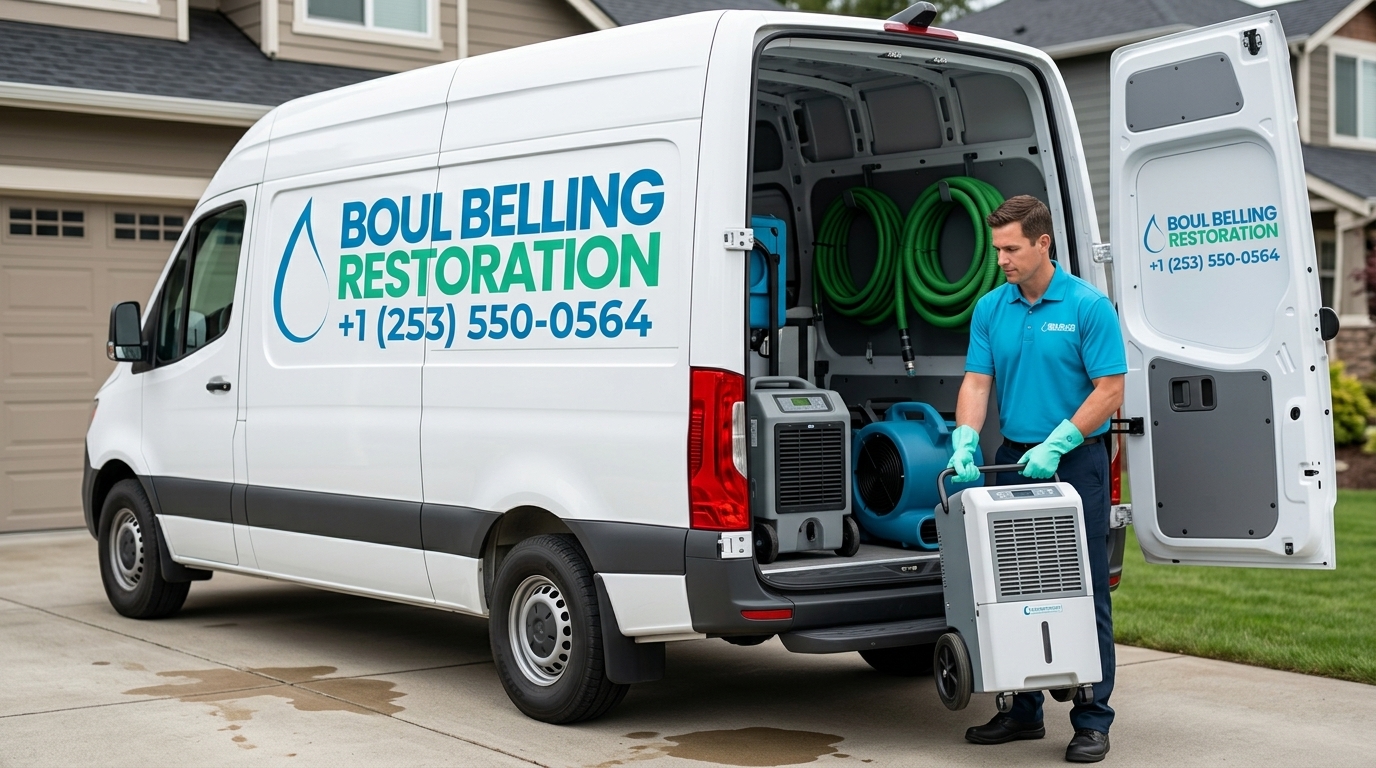
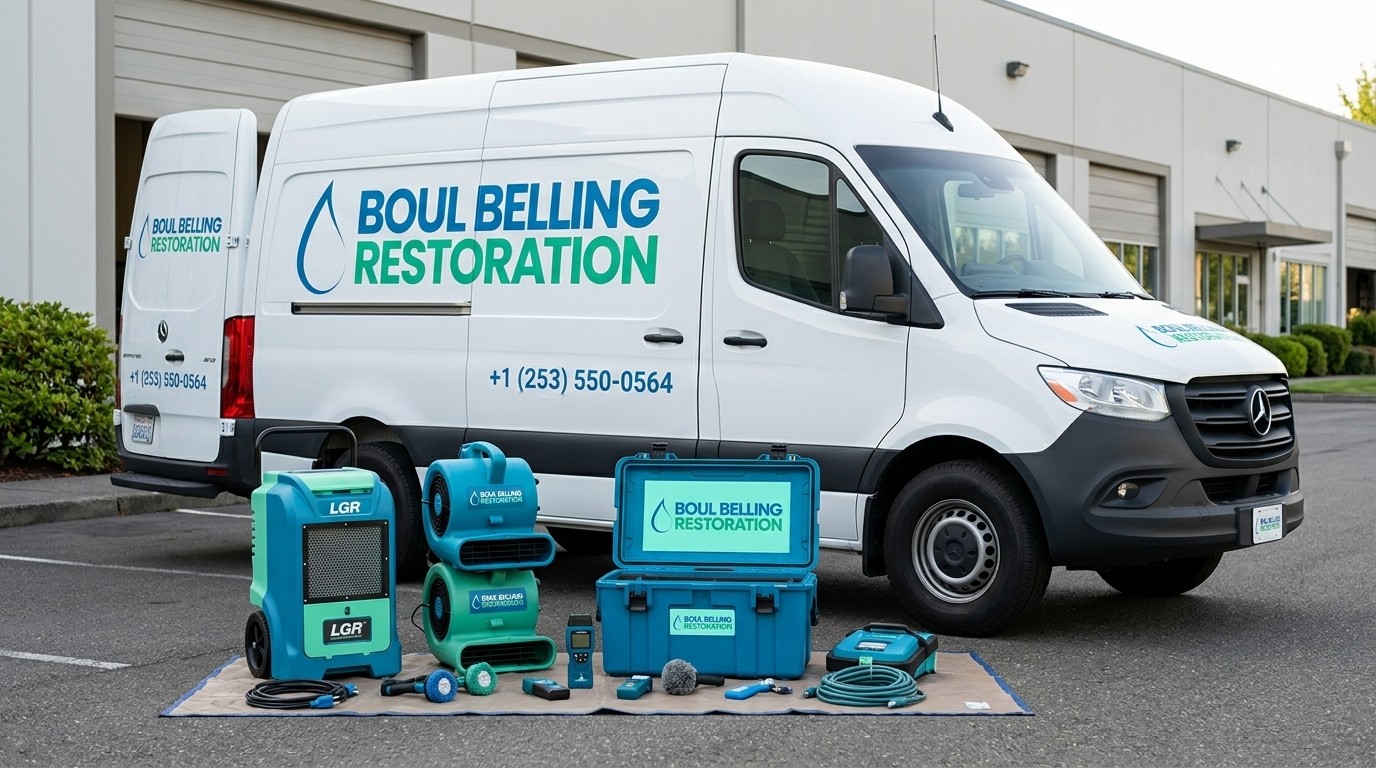
Water Damage Restoration Gallery — Bellingham Before & After
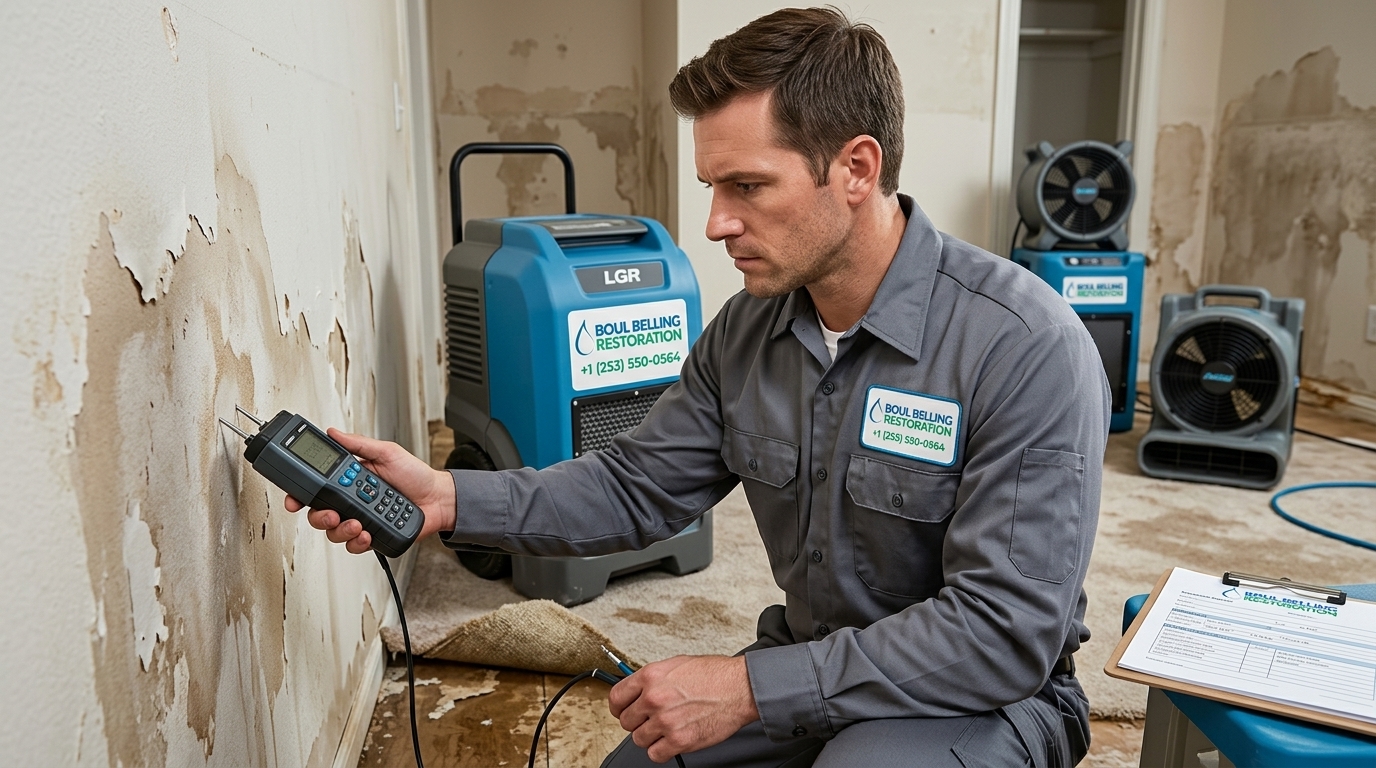
See how we extract floodwater, dry structural materials to IICRC standard, and restore Bellingham properties — with thermal imaging evidence and moisture-verified documentation.
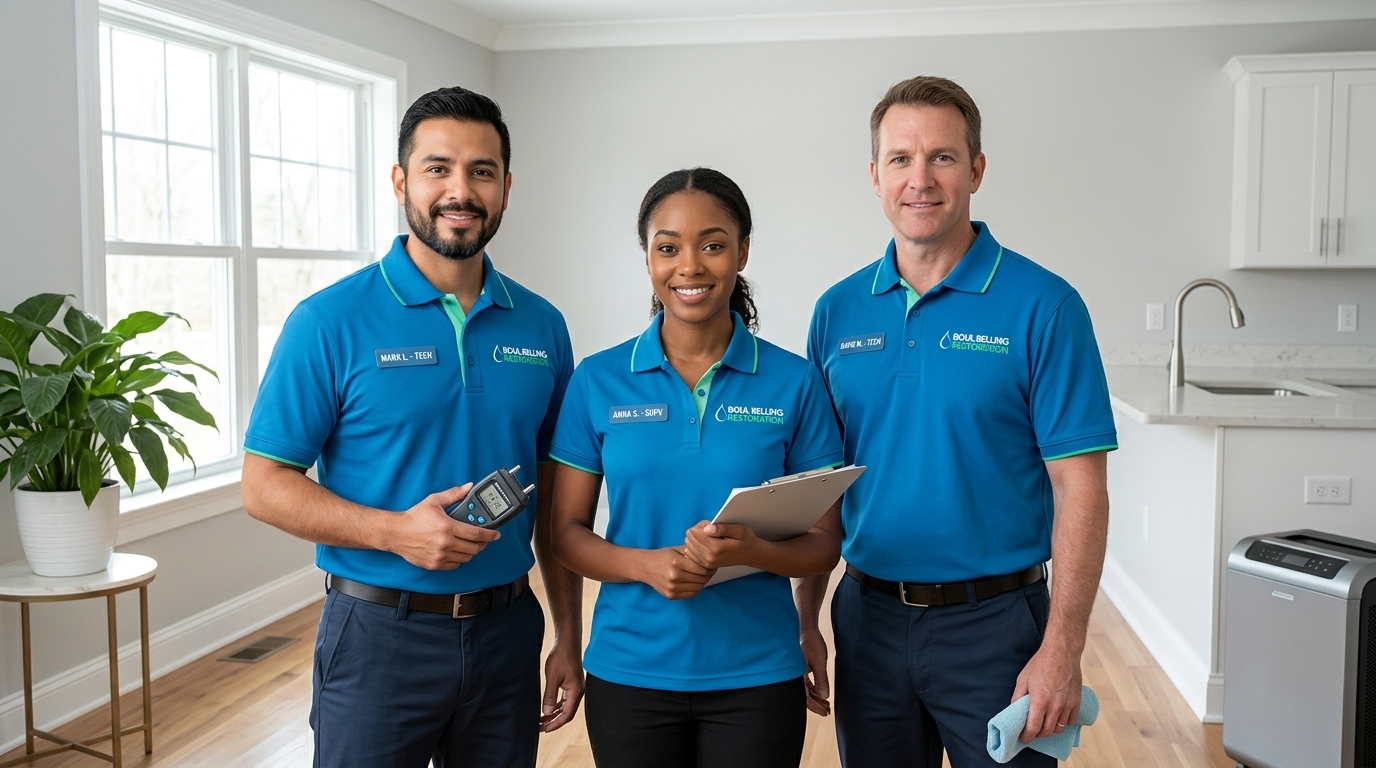
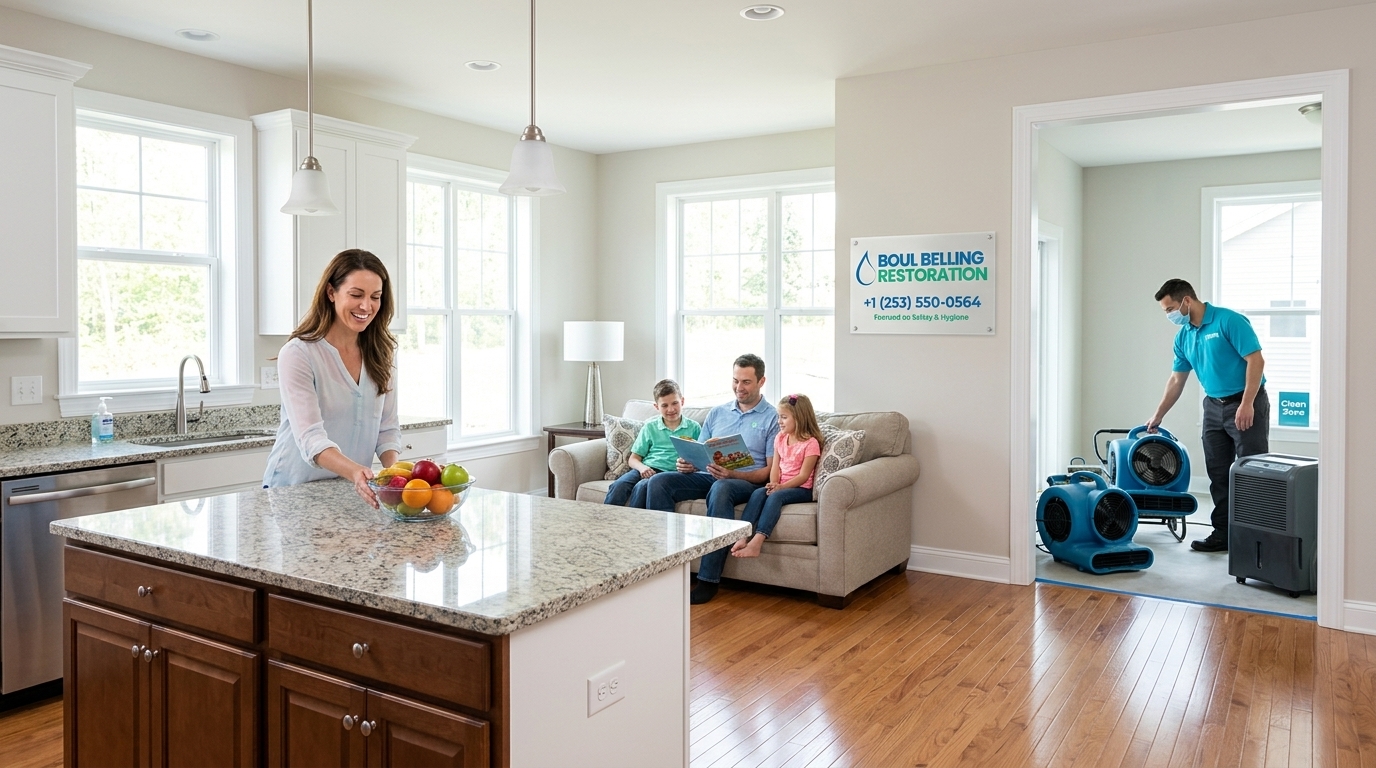
Our gallery features real restoration projects completed throughout Bellingham, Ferndale, Birch Bay, Sudden Valley, Whatcom Falls, and surrounding Whatcom County communities. Every image shows a documented condition before restoration, the assessment method used, and the verified final state — from thermal imaging assessments of crawl space flooding in Happy Valley after atmospheric river events, to Category 3 sewage backup decontamination in Downtown Bellingham commercial properties, to FSRT-certified fire damage restoration in the Historic Fairhaven District, to AMRT-certified mold remediation in attics and crawl spaces throughout Birchwood and Sehome.
We don't use stock photography. These are actual Whatcom County properties, actual damage conditions, and actual completed restorations performed by our own IICRC-certified technicians. Each project includes time-stamped documentation, water category classification, moisture readings before and after drying, and a final clearance verification — so homeowners, landlords, and insurance adjusters can see clearly what the actual condition was, what protocols were applied, and how clearance was verified.
From a single crawl space flood addressed within the 24-hour mold development window to a multi-room structural drying project following a burst pipe in a Heritage Palms-area rental, from a post-fire smoke and soot restoration in a Sehome home to a whole-house mold remediation in an older Fairhaven crawl space property — our gallery reflects the same focus and documentation precision we bring to every project: IICRC-standard practice, Pacific Northwest-calibrated drying, and complete documentation built for Bellingham's climate, housing stock, and property types.
Water Damage Restoration Bellingham WA — Service Area Coverage
When planning restoration services in Bellingham, our emergency restoration team accounts for Pacific Northwest weather patterns near Whatcom Falls, coastal access conditions near Birch Bay, rural community access throughout Sudden Valley, and seasonal flooding challenges throughout Whatcom County.
Cities We Serve Near Bellingham WA
We Serve All Bellingham WA Neighborhoods
Get Emergency Water Damage Restoration in Bellingham WA Now
Need an emergency restoration company in Bellingham WA? Our 30 skilled professionals are standing by 24/7. If you can't find the information you need about our restoration services in Bellingham WA, please reach out and we'll walk you through your options.
Contact Boul Belling Restoration
(253) 550-0564
boulbellingrestoration@gmail.com
110 Forest Ln
Bellingham, WA 98225
24/7 Emergency Service Available