Fire Damage Restoration in Bellingham, WA — Soot Cleanup, Smoke Odor Removal & Structural Recovery
FSRT-Certified Fire & Smoke Damage Response — Serving Bellingham, Whatcom County & the Pacific Northwest Since 2015
After a fire in your home or business, fire damage restoration needs to begin immediately — every hour that soot and smoke residue remain untreated, corrosive byproducts etch surfaces, tarnish metals, and drive smoke odors deeper into walls, insulation, and structural framing. Boul Belling Restoration provides professional fire damage restoration in Bellingham, Washington, with IICRC FSRT-certified technicians handling structural cleaning, soot removal, smoke odor elimination, content restoration, and full rebuild coordination from a single certified company. If firefighting water also caused damage, our team handles emergency water damage restoration alongside fire cleanup.
- Local Bellingham, WA fire damage restoration company since 2015
- IICRC FSRT (Fire and Smoke Damage Restoration Technician) certified on staff
- 24/7 emergency response for board-up, stabilization, and immediate soot mitigation
- Serving Bellingham, Ferndale, Birch Bay, Sudden Valley, Lakeway, Meridian, and all of Whatcom County
No Extra Charge to Call
Request Fire Damage Assessment
Fill out the form and we'll contact you immediately!
Award-Winning Fire Damage Restoration in Bellingham, Washington
Whatcom County's IICRC FSRT-certified fire and smoke damage response team
Boul Belling Restoration is a fully certified fire damage restoration company with 10 years of experience responding to fire and smoke damage throughout Bellingham and Whatcom County. Led by Owner Ryan Swank, our team holds the IICRC Fire and Smoke Restoration Technician (FSRT) certification — the industry-standard credential covering scoping, mitigation, cleaning, deodorization, and documentation of fire and smoke damaged structures and contents. Combined with our Health and Safety Technician (HST) certification, we bring both technical restoration expertise and the health and safety oversight that fire-damaged environments require.
FSRT Certified
Fire and Smoke Restoration Technician — IICRC Certified
HST Certified
Health and Safety Technician — IICRC Certified
WRT Certified
Water Damage Restoration Technician — IICRC Certified (for firefighting water damage)
AMRT Certified
Applied Microbial Remediation Technician — IICRC Certified (for post-fire mold risk)
30 Professionals
30 skilled restoration professionals, 5 fully equipped service vehicles
10 Years Serving
10 years serving Bellingham, WA and all of Whatcom County
24/7 Availability
24/7 emergency availability — board-up and stabilization same day
Fire Damage Restoration for Properties Near Bellingham's Historic Districts, Parks & Neighborhoods
From Fairhaven's Victorian homes to properties near Larrabee State Park and the Chuckanut Mountains
Boul Belling Restoration responds to fire and smoke damage emergencies throughout Bellingham, Washington — from historic Victorian and Craftsman homes in the Fairhaven Historic District and near the Pickett House, where original wood construction and old-growth fir framing present specific fire damage restoration challenges, to properties near Galbraith Mountain and Larrabee State Park where Pacific Northwest wildfire season creates genuine risk for homes at the wildland-urban interface, to commercial properties throughout Downtown Bellingham, Barkley Village, and the Sehome corridor. Every Bellingham neighborhood has its own construction era and fire risk profile, and our local knowledge of each makes a difference in how we approach the restoration.
Bellingham Neighborhoods
Cordata, Sehome, Barkley, South Hill, Columbia, Downtown Bellingham, Happy Valley, Whatcom Falls, Birchwood, Samish
Forested & Wildland-Adjacent Areas
Galbraith Mountain, Larrabee State Park, Chuckanut Mountains, Padden Gorge, Sehome Hill Arboretum, Lake Padden Park
Historic & Cultural Areas
Historic Fairhaven District, Pickett House, Roeder Home, Whatcom Museum / Old City Hall, Mount Baker Theatre
Education & Waterfront
Western Washington University, Whatcom Community College, Squalicum Harbor, Bellingham Bay
Nearby Service Areas
Ferndale, Lummi Nation, Birch Bay, Sudden Valley, Lakeway, Meridian, and surrounding Whatcom County communities
Bellingham's FSRT-Certified Fire Damage Team — Complete Restoration, Not Just Surface Cleanup
Soot, smoke odor, and structural damage require specific certified techniques — not general cleaning
Fire damage restoration is technically distinct from general cleaning in ways that matter significantly to outcome. Wiping soot with the wrong cleaning product causes it to condense and penetrate further into surfaces, making permanent damage more likely. Smoke odor elimination requires oxidation-based molecular deodorization rather than simply masking the smell. Our FSRT-certified technicians apply the correct cleaning chemistry, sequencing, and deodorization techniques for each surface and material type, addressing damage that untrained cleanup attempts routinely make worse. When firefighting has also caused water intrusion, our WRT certification means we handle structural water damage repair as part of the same certified response.
What Fire Damage Actually Does to Your Home or Business in Bellingham, WA
Why the clock starts the moment the fire is extinguished
The damage from a fire doesn't stop when the flames are out. Soot is corrosive — within hours, it begins etching glass surfaces, tarnishing metals, and permanently discoloring porous materials. Smoke penetrates deeply into walls, insulation, ductwork, and structural framing where it creates persistent odor that cannot be eliminated with surface cleaning alone. Firefighting water creates its own secondary damage, introducing moisture that accelerates mold risk in Bellingham's already humid Pacific Northwest climate. If firefighting water reached below-grade areas, basement flood cleanup may also be required.
Soot Etching Begins Immediately
Soot begins etching glass and tarnishing metals within hours of a fire — the faster professional cleanup begins, the more surfaces can be saved
Smoke Penetrates Deeply
Smoke odor penetrates at the molecular level into walls, insulation, ductwork, and furniture — surface cleaning alone cannot eliminate it
Firefighting Water Damage
Firefighting water creates secondary water damage that must be addressed alongside smoke and soot cleanup
Protein Residue — Invisible Danger
Protein residue from kitchen fires is nearly invisible but highly odorous and requires specialized cleaning chemistry not found in consumer products
Fire Extinguisher Powder
Fire extinguisher powder is corrosive to metals and etches glass — it must be cleaned promptly and properly to prevent permanent damage
Who Our Fire Damage Restoration Service Is For
Homeowners, landlords, and commercial property managers throughout Whatcom County
We provide fire damage restoration for single-family homes, rental properties, multi-unit residential buildings, and commercial properties throughout Bellingham and Whatcom County — from contained kitchen fires to structural fires requiring full reconstruction.
Kitchen & Electrical Fire Victims
Homeowners dealing with a kitchen fire, electrical fire, or fireplace-related fire in Bellingham
Wildfire-Adjacent Properties
Property owners near Galbraith Mountain and the Chuckanut corridor concerned about wildfire smoke intrusion
Historic Fairhaven Homeowners
Historic Fairhaven homeowners who need fire restoration expertise that respects original construction materials
Landlords & Property Managers
Landlords and property managers dealing with fire damage in rental units throughout Whatcom County
Commercial Property Owners
Commercial property owners needing certified documentation for insurance claims after a fire event
Persistent Smoke Odor
Anyone dealing with smoke odor that has persisted following an incomplete initial cleanup
Fire Damage Risk Factors in Bellingham & Whatcom County
How Pacific Northwest conditions create specific fire damage restoration challenges
Bellingham's Pacific Northwest setting creates specific fire damage contexts that differ from other regions. Homes near the forested areas above the city — Galbraith Mountain, Larrabee State Park, and the Chuckanut Mountains — face genuine wildfire smoke intrusion risk during Pacific Northwest wildfire seasons. Older homes in Fairhaven and historic Bellingham neighborhoods contain original wood construction, knob-and-tube wiring in some cases, and wood-burning stoves or fireplaces that present different fire damage profiles than modern construction. And when fires occur in Bellingham's climate, the firefighting water introduces moisture into a high-humidity environment where mold risk following a fire is meaningfully elevated compared to drier regions.
Wildfire Smoke Intrusion
Homes near Galbraith Mountain, Larrabee State Park, and the Chuckanut Mountains face smoke intrusion risk from Pacific Northwest wildfire season
Older Home Construction
Older Fairhaven and Whatcom Falls homes may contain original wood construction and older heating systems that present specific fire damage profiles
Elevated Post-Fire Mold Risk
Firefighting water in Bellingham's high-humidity Pacific Northwest environment creates elevated post-fire mold risk compared to drier regions
Wood-Burning Appliances
Wood-burning stoves and fireplaces common in older Bellingham homes can cause chimney and structural fires with different soot profiles than modern equipment
Structural Fire, Smoke Damage, Soot Residue & Wildfire Smoke: Fire Damage Types in Bellingham, WA
Understanding the type and scope of fire damage determines the right restoration approach
For fire damage restoration in Bellingham, the type of fire, what materials burned, and how far smoke has traveled all determine the protocols, cleaning chemistry, and deodorization approach our team deploys.
| Fire Damage Type | What Happened | Restoration Approach |
|---|---|---|
| Structural Fire (Full Room+) | Flames damaged structure, contents, and framing | Emergency board-up, demolition, structural cleaning, rebuild |
| Kitchen / Contained Fire | Limited fire area, smoke traveled further | Soot cleanup, surface deodorization, smoke odor treatment |
| Protein Residue (Cooking Fire) | Nearly invisible but odorous protein film on surfaces | Specialized enzyme cleaning, molecular deodorization |
| Electrical / Smoldering Fire | Synthetic soot, oily residue, intense odor | Wet cleaning for synthetic soot, hydroxyl treatment |
| Wildfire Smoke Intrusion | Smoke entered from exterior wildfire event | HVAC cleaning, surface deodorization, air quality treatment |
| Firefighting Water Damage | Secondary water damage from suppression efforts | Extraction, structural drying alongside fire cleanup |
Dry Soot
From fast-burning fires — can often be removed before it sets. Timing is critical to prevent permanent surface damage.
Wet Soot
From slow-burning fires — oily residue that requires specific wet-cleaning chemistry to avoid smearing and deeper penetration.
Protein Residue
Among the most challenging — the film is nearly invisible while the odor is intense. General cleaning misses it entirely.
Wildfire Smoke
Common near forested Bellingham neighborhoods during Pacific Northwest fire seasons — requires HVAC cleaning alongside surface treatment.
Our 6-Step Fire Damage Restoration Process in Bellingham, WA
From emergency stabilization to completed, deodorized restoration
Emergency Board-Up & Stabilization
We secure fire-damaged properties with board-up and roof tarping services to prevent weather intrusion, vandalism, and further structural exposure while restoration begins.
Damage Scope Assessment & Documentation
Our FSRT-certified technicians perform a complete scope assessment — identifying all areas affected by flame, soot, smoke, and firefighting water — and document the full scope with photos and written reports for insurance purposes.
Content Protection & Pack-Out
We document, protect, and remove salvageable contents for off-site cleaning and safe storage, separating items that can be restored from those that cannot and providing a complete inventory.
Structural Soot Cleaning
Using material-specific cleaning chemistry for each surface type — walls, ceilings, structural framing, flooring, and fixtures — we remove soot and char residue without causing the secondary damage that incorrect cleaning chemistry causes.
Smoke Odor Elimination
We treat smoke odor at the molecular level using thermal fogging, ozone treatment, or hydroxyl generation as appropriate for the fire type and extent, eliminating odor at the source rather than masking it with surface deodorizers.
Reconstruction Coordination & Final Documentation
We coordinate or execute structural reconstruction from controlled demolition through drywall, flooring, painting, and finish work via our water damage repair team, and deliver complete insurance documentation from scope through final restoration.
What's Included in Our Bellingham Fire Damage Restoration Service
From emergency stabilization to completed structural restoration
Our fire damage restoration service is a complete response package covering every phase of recovery.
Bellingham's Trusted Fire Damage Restoration Team
FSRT certification, complete scope, and single-company accountability
When you compare fire damage restoration companies in Bellingham, Boul Belling Restoration stands out for genuine FSRT certification, the technical knowledge to apply correct soot cleaning chemistry, and the ability to handle both the fire damage restoration and the secondary water damage from firefighting in a single coordinated response.
IICRC FSRT Certified
The specific credential for fire and smoke damage scoping, cleaning, and documentation
HST Certified
Health and safety oversight in fire-damaged environments
10 Years Serving
Bellingham, WA and all of Whatcom County
30 Professionals
In-house team, 5 fully equipped vehicles
Complete Scope
Including secondary water damage — no separate contractor needed
What Certified Fire Damage Restoration Achieves in Bellingham, WA
From soot-covered surfaces and persistent smoke odor to restored, habitable property
Our fire damage restoration projects show properties returned to pre-loss condition with surfaces, contents, and structures genuinely restored rather than cosmetically patched over ongoing soot and odor problems.
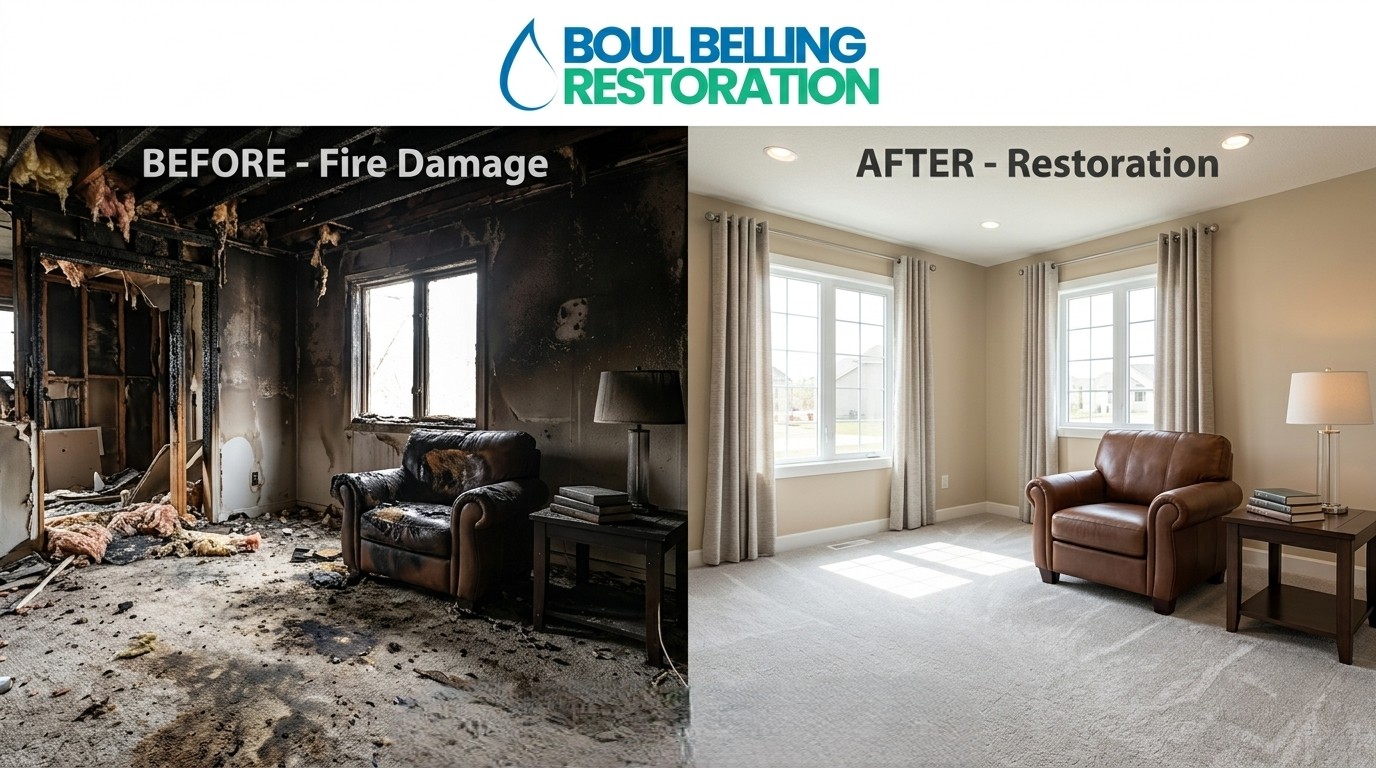
Fairhaven Victorian — Kitchen Fire
A Fairhaven Victorian kitchen fire responded to within hours, saving original hardwood floors and trim from permanent soot etching through rapid and correct cleaning chemistry
Birchwood — Electrical Fire
A Birchwood home's contained electrical fire cleaned with material-specific protocol, eliminating synthetic soot odor through hydroxyl treatment
Downtown Bellingham — Commercial Kitchen
A commercial property in Downtown Bellingham restored after a kitchen fire with complete content pack-out, structural cleaning, and rebuild
Sehome — Persistent Smoke Odor
A Sehome home's persistent smoke odor from an incomplete previous cleanup eliminated through molecular thermal fogging after the original cleaner's surface approach failed
Fire Damage Restoration Equipment and Methods in Bellingham, WA
FSRT-certified chemistry, equipment, and deodorization techniques
We use FSRT-certified cleaning chemistry and professional-grade equipment for every fire damage restoration project in Bellingham.
Material-Specific Cleaners
Alkaline cleaners, detergents, solvents, and enzyme cleaners for correct soot removal on each surface type
Thermal Fogging
Molecular penetration of smoke odor into porous materials for genuine odor elimination at the source
Ozone Generation
For severe odor in unoccupied areas — powerful oxidation-based deodorization for deep smoke penetration
Hydroxyl Generators
Odor treatment safe for occupied or occupied-adjacent spaces without requiring evacuation
HEPA Air Scrubbers
HEPA filtration for airborne soot and particulate removal during and after cleanup
Water Extraction Equipment
Water extraction and structural drying equipment for secondary water damage from firefighting
Why DIY Soot Cleanup Makes Fire Damage Worse in Bellingham, WA
The most common fire damage mistake costs more to fix than the original event
The single most common fire damage mistake Bellingham homeowners make is attempting to wipe soot before professional assessment. Using incorrect cleaning products — even household cleaners — causes soot to condense, penetrate deeper, and permanently etch surfaces that could have been saved. Fire restoration chemistry is material-specific: wet soot, dry soot, and protein residue each require different approaches. What works on one type of soot actively makes another type worse.
| Approach | What It Addresses | What It Risks |
|---|---|---|
| DIY Soot Wiping | Visible soot on surfaces | Condensing soot deeper into porous materials, causing permanent damage |
| Surface Deodorizers | Masking smoke odor temporarily | Odor returning within days; no molecular elimination |
| Professional FSRT Restoration | All soot types correctly cleaned, odor eliminated at source | Nothing — certified restoration is complete |
The DIY Damage Risk:
- Wiping soot without correct chemistry causes it to smear and penetrate permanently into drywall, wood, and fabric
- Fire extinguisher powder must be cleaned with specific chemistry — water applied directly can reactivate its corrosive properties
- Surface deodorizers do not eliminate smoke odor — molecular deodorization treatment is required to break the odor compounds at the source
- Attempting to paint over smoke-stained surfaces without proper sealants allows odor to bleed through new paint within weeks
Estimate Your Fire Damage Restoration Cost in Bellingham, WA
From a contained kitchen fire to a structural fire requiring full reconstruction
We provide a free on-site scope assessment with transparent, documented pricing before any work begins.
Main Cost Drivers:
- Extent of the fire: contained single room vs. multi-room or structural fire
- Materials burned: different materials create different soot types requiring different cleaning protocols
- Smoke travel: how far smoke and odor have penetrated beyond the fire area
- Secondary water damage from firefighting
- Whether reconstruction is needed alongside soot and odor restoration
| Restoration Scope | Typical Range |
|---|---|
| Contained kitchen or small-room fire | ~$3,000 – $10,000 |
| Single-room structural fire, cleaning and odor | ~$8,000 – $25,000 |
| Multi-room fire with partial reconstruction | ~$15,000 – $50,000+ |
| Major structural fire, full reconstruction | ~$50,000+ |
| Smoke odor-only treatment (no structural fire) | ~$2,500 – $8,000 |
Who Needs Professional Fire Damage Restoration in Bellingham, WA?
When a fire event requires certified professional response
We recommend professional FSRT-certified fire damage restoration for any fire or smoke event that has left visible soot, residue, or persistent odor in your property.
Any fire that produced visible soot, smoke residue, or persistent odor in your home or business
Any fire where responders used water or fire extinguisher that left secondary residue or moisture
A persistent smoke smell that hasn't resolved weeks or months after a fire or smoke event
Wildfire smoke intrusion from Pacific Northwest fire seasons that has penetrated HVAC systems and porous surfaces
A rental property that needs certified documentation of complete fire damage restoration before a tenant re-occupies
Any fire event where your insurance company will require certified documentation of scope and remediation
Benefits of Certified Fire Damage Restoration in Bellingham, WA
FSRT certification isn't a formality — it's the difference between actual odor elimination and masking
Professional, FSRT-certified fire damage restoration determines whether your property is genuinely returned to pre-loss condition or whether soot corrosion and smoke odor return after initial cleanup appears complete.
Correct Soot Chemistry
Correct soot cleaning chemistry prevents the permanent etching and discoloration that incorrect DIY approaches cause
Genuine Odor Elimination
Molecular-level smoke odor elimination ensures odor is gone, not masked — a property that smells like smoke after restoration is an incomplete restoration
Insurance Documentation
FSRT certification ensures the restoration follows documented industry standards that support your insurance claim
Health & Safety Oversight
HST oversight ensures the health and safety of occupants and technicians in a fire-damaged environment
Clean Claim Closure
Complete documentation from scope through restoration supports clean insurance claim closure
Safety Alert: Fire-Damaged Structures Are Not Safe to Re-Enter Without Professional Assessment
Visible fire damage represents the minimum scope — hidden risks require professional evaluation
Fire-damaged structures contain hidden hazards that aren't visible from the doorway: compromised structural members that appear intact but may fail under load, electrical systems that were exposed to heat or water, airborne soot particles that pose respiratory risks, and in older Bellingham properties, asbestos-containing materials that become hazardous when disturbed by fire damage.
- Do Not Re-Enter: Do not re-enter a fire-damaged structure until fire department officials have cleared it as safe for occupancy assessment
- Structural Risk: Never assume structural integrity based on visual inspection — heat can compromise framing members that appear undamaged
- Respiratory Hazard: Airborne soot particles pose a genuine respiratory hazard — wear appropriate protection or stay out until professional cleanup is underway
- Asbestos Risk: Older Bellingham properties built before 1980 may contain asbestos in flooring, insulation, or ceiling tiles that becomes hazardous when disturbed by fire damage
- Don't Clean Soot First: Do not attempt to clean soot before professional assessment — incorrect cleaning chemistry causes permanent damage to surfaces that could otherwise be restored
Fire Damage Restoration FAQs for Bellingham, WA Property Owners
Answers about soot cleanup, smoke odor, cost, and insurance
A contained kitchen or small-room fire typically costs $3,000 to $10,000 for professional soot cleanup and odor treatment. Single-room structural fires with cleaning and odor work run $8,000 to $25,000. Multi-room fires with reconstruction can range from $15,000 to $50,000 or more depending on scope. Call (253) 550-0564 for a free assessment.
Soot requires material-specific cleaning chemistry — different types of soot respond differently to cleaning products. Using the wrong product can condense soot deeper into surfaces, cause permanent etching, or create chemical reactions with fire extinguisher residue that worsen the damage. Professional FSRT-certified cleaning is the safest approach for any visible soot.
Yes — with proper molecular deodorization treatment. Surface cleaning alone and consumer deodorizers only mask smoke odor temporarily. Thermal fogging, ozone treatment, or hydroxyl generation applied by certified technicians eliminates the odor compounds at the molecular level for genuine, lasting elimination.
Most homeowner's insurance policies cover fire damage restoration including soot cleanup, smoke odor treatment, content restoration, and structural rebuild. We provide complete FSRT-certified scope documentation and work directly with your adjuster to support your claim.
Yes. Our team holds both FSRT and WRT certifications, meaning we handle fire damage restoration and secondary water damage from firefighting in a single coordinated response. This includes extraction, structural drying, and if needed, mold prevention from moisture introduced during fire suppression. If water reached below-grade spaces, our basement flood cleanup team handles that as well.
Our Bellingham Fire Damage Restoration Guarantee
FSRT-certified restoration, molecular odor elimination, and a property returned to genuine pre-loss condition
Boul Belling Restoration stands behind every fire damage restoration project in Bellingham, WA with IICRC FSRT-certified technique and our own satisfaction guarantee. When we complete a fire damage restoration project, the smoke odor is eliminated at the source — not masked — and every affected surface has been cleaned with the correct material-specific chemistry.
Since 2015, property owners across Bellingham — from historic Fairhaven homes to commercial properties in Downtown Bellingham and Barkley Village — have trusted Boul Belling Restoration for professional fire damage restoration in Bellingham, WA that genuinely returns their properties to the condition they were in before the fire. Whether your project also requires structural water damage repair or mold remediation from post-fire moisture, we handle the full scope under one certified team.
Fire Damage Restoration Bellingham WA — Service Area Coverage
When responding to fire damage restoration in Bellingham, our team accounts for the wildland-urban interface risk near Sudden Valley, historic construction in Fairhaven, and the elevated post-fire mold risk throughout the Pacific Northwest climate of Whatcom Falls and Birch Bay.
Cities We Serve for Fire Damage Restoration Near Bellingham WA
We Serve All Bellingham WA Neighborhoods for Fire Damage Restoration
Get Fire Damage Restoration in Bellingham WA Now
Need fire damage restoration in Bellingham WA? Our 30 FSRT-certified professionals are standing by 24/7. If you need information about our full range of restoration services, please reach out.
Contact Boul Belling Restoration
(253) 550-0564
boulbellingrestoration@gmail.com
110 Forest Ln
Bellingham, WA 98225
24/7 Emergency Service Available